
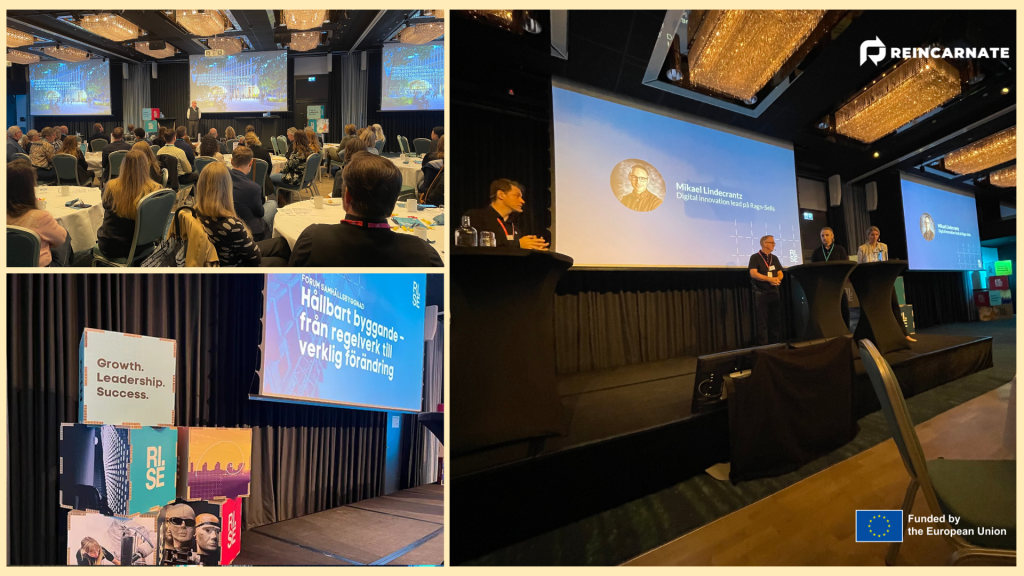
The transition toward sustainable construction is no longer theoretical, it is actively underway. This was the clear signal from Forum Samhällsbyggnad 2026, where actors from the construction and real estate value chain came together to discuss how climate goals, EU regulations, and innovation can translate into real-world impact. What emerged from the event is that the challenge is no longer about defining ambition, but about execution: how to connect data, materials, and actors in a way that enables solutions to scale.
A recurring theme throughout the discussions was the growing importance of circularity, particularly in how materials are managed. Increasing regulatory pressure from the EU – especially around digital product passports and traceability – is pushing the industry toward a more structured and data-driven approach. At the same time, this shift opens up new opportunities for those who can operationalize reuse and integrate it into existing workflows
In this context, Mikael Lindecrantz from our partner Ragn-Sells highlighted an important perspective on how materials should be managed in a more circular economy.
As he put it: “It is about finding the optimal route for the material and letting the material’s properties determine how it is used. The EU has standards for digital documentation of materials, and we have in parallel developed ways to describe how materials can be reused. By connecting these conceptual values, we get a positive effect: the material is used better and at the same time the data needed for reporting is generated — a real win-win.”
This rendered the idea that materials already have value, but without structured data and clear reuse pathways, that value is lost. To unlock circularity at scale, the industry needs systems that connect what materials are, where they are, and how they can be used again.
This is exactly the transition Reincarnate is working to enable: turning circular construction from ambition into practice through a Circular Potential Information Management platform and ten connected innovations that help actors inspect, value, trace, plan, dismantle, upgrade, and reuse construction products and materials more effectively across the building lifecycle.