
The Reincarnate consortium gathered in Rotterdam on 12–13 March 2026 for its eighth General Assembly, hosted by Erasmus University Rotterdam. Over two days, partners reviewed the status of demonstration activities, digital integration, training, dissemination, standardisation, and exploitation, while aligning priorities for the project’s closing phase.
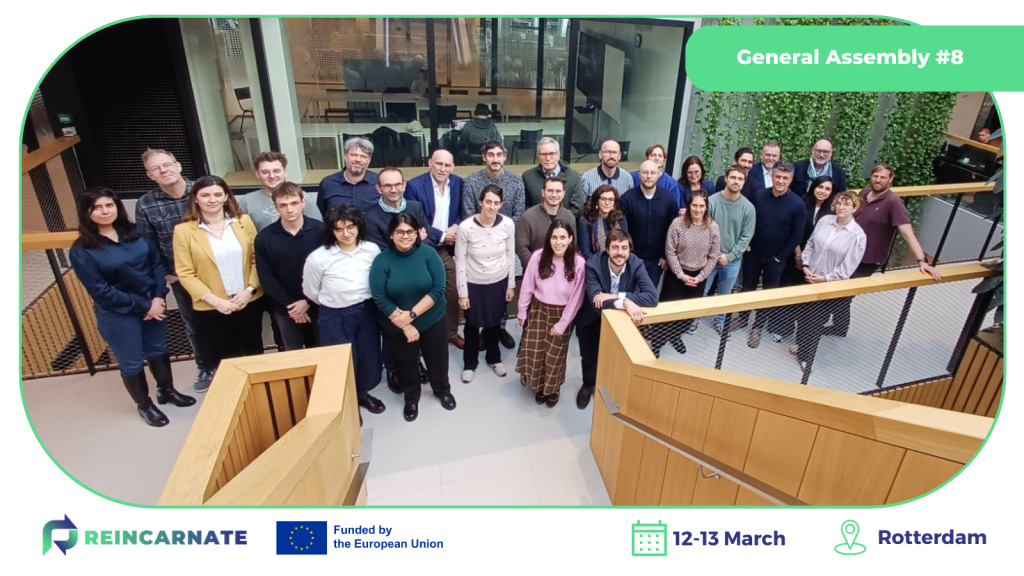
The meeting confirmed that Reincarnate has moved decisively from development into consolidation: pilot cases are advancing, the training platform is nearing completion, and the project’s technical, strategic and market-oriented outputs are being prepared for final validation and uptake.
Day 1 – Demonstrations, workflows and training
The first day focused on demonstration activities and on how Reincarnate’s innovations are being applied in practice. Partners shared updates from the demo cases, showing how technical development is increasingly connected to real construction settings. From BIM models and pilot implementation to replication potential, the discussions highlighted how the project’s ten innovations are coming together in concrete use cases.
Several examples illustrated this progress clearly. The Kathreiner Haus case showed how reclaimed building components can be integrated directly into BIM-based design through an automated workflow. The Paris Habitat demo presented a participatory circular decision-making approach for social housing renovation and densification. Another important example came from Hong Kong, where an autonomous mobile robot is being developed for on-site sorting of construction and demolition waste, helping improve safety, reduce manual handling and increase recycling rates.
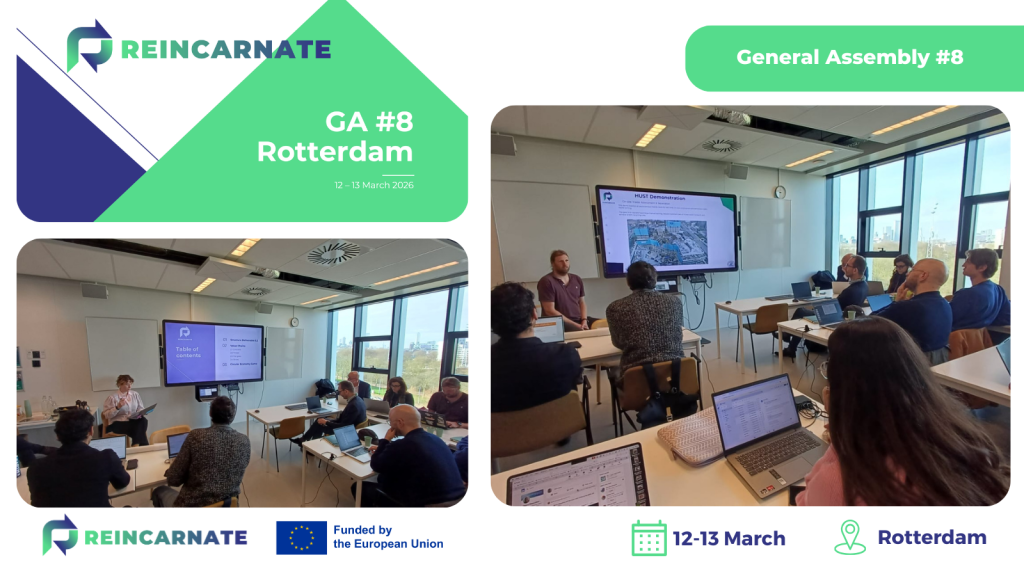
The day also included the presentation of the Business Process Maps for Reuse-Centred Digital Tools, which help position the innovations within a clearer circular workflow. Training was another major topic, with updates showing strong progress on the Reincarnate training platform and the completion of many innovation-related courses. The afternoon continued with the Reincarnate Game Session and updates on the final version of the CP-IM and the Life-Demo 3L Building.
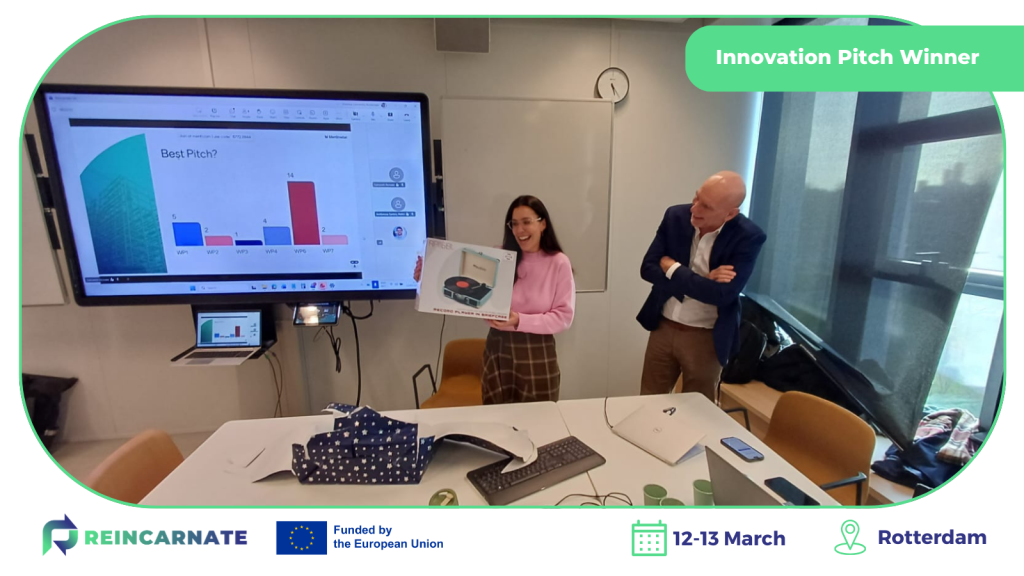
The day ended with the traditional Innovation Pitches, one of the most appreciated moments of every General Assembly: a lively and creative session where partners showcased their latest ideas and progress, capturing the project’s collaborative spirit. This time, Carmen Serna from AUSTRALO took the win with a creative pitch that linked motherhood and maternity with EU projects and research, bringing humour and originality into the equation.
Day 2 – Impact, standardisation and next steps
The second day opened with the Technical Board Meeting and continued with an Advisory Board session, which brought an additional strategic perspective to the discussions before the consortium moved on to dissemination, KPI review, standardisation and exploitation.
The dissemination update highlighted solid communication progress, with newsletters, publications, awareness actions and a growing online community helping increase Reincarnate’s visibility. At the same time, the discussions made clear that the final months of the project are a key moment to strengthen outreach and make demo results more visible to external audiences.
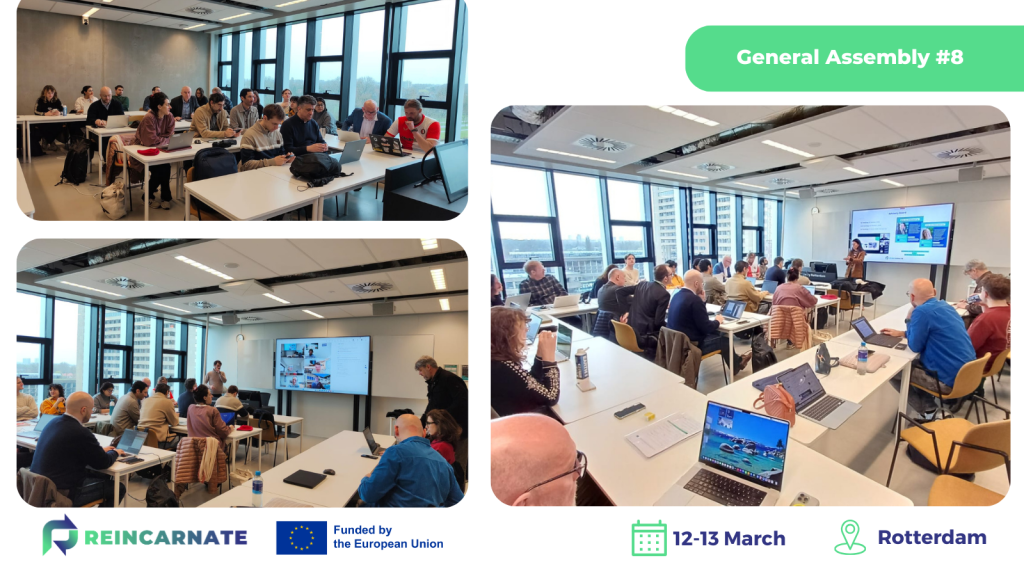
Standardisation and exploitation were also central to the day. Austrian Standards International presented the latest work on barriers and opportunities for circular construction, as well as how Reincarnate’s results can contribute to future standardisation activities. DEMO Consultants then outlined the path toward exploitation, including the final steps for key exploitable results and preparations for the final Reincarnate event and workshop in Berlin in May 2026.
The Rotterdam General Assembly marked an important step in Reincarnate’s final phase. With demonstrations advancing, training resources nearing completion and impact-oriented activities gaining momentum, the project is now firmly focused on turning its work into lasting value. The consortium leaves Rotterdam with a shared commitment to final validation, wider uptake and a stronger contribution to circular construction in Europe and beyond.