
A practical approach to cutting waste in social housing renovation
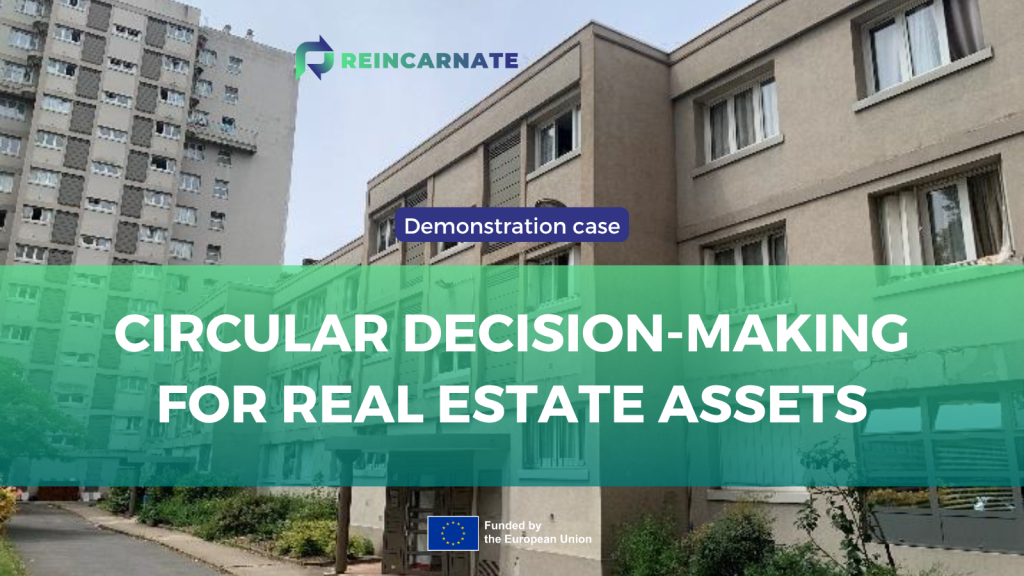
The Reincarnate demonstration case in Paris shows how circular renovation decisions can be grounded in real-world analysis. Applied to a 1950s social housing complex with 281 apartments in the 15th arrondissement, the project focused on identifying viable alternatives to demolition, addressing poor energy performance and evolving housing needs.
Working directly with Paris Habitat’s internal team, the project developed and tested a participatory decision-making framework. Through a series of workshops, stakeholders explored 21 possible renovation scenarios, combining different levels of energy upgrade, material use, and building extension. These options were not only discussed qualitatively, but also rigorously compared using multi-criteria evaluation methods, allowing environmental, economic and social priorities to be assessed together.
The process led to the selection of a preferred strategy that combines deep energy renovation with limited densification and maximum reuse of the existing structure. This scenario achieved strong overall performance across all key criteria, while remaining aligned with stakeholder expectations. Compared to a demolition-and-rebuild approach, it is projected to reduce construction and demolition waste by around 80%, increase component reuse by approximately 70%, and cut embodied emissions by about 70%.
Beyond the technical outcome, the demonstration highlights the value of structured collaboration in complex renovation projects, improving alignment and making trade-offs more transparent. The results are now being integrated into Reincarnate’s digital tools to support wider application.