
Digital tools can make the reuse of building components a practical part of everyday design workflows.
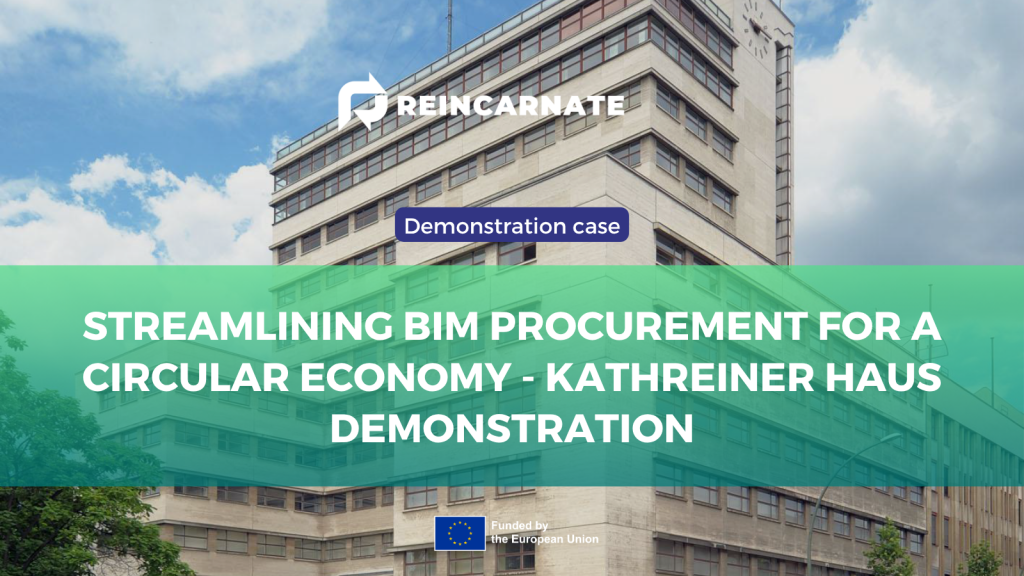
The Reincarnate demonstration at Kathreiner Haus in Berlin explores how: applied to a real renovation context, the case focuses on integrating reclaimed windows into BIM-based design processes, showing how circularity can be embedded already at the procurement stage.
At the centre of the demonstration is a parametric tool developed in Dynamo for Revit, designed to match available reclaimed components with project requirements. The system compares window dimensions from a BIM model with entries from a digital marketplace, using tolerance-based logic to identify the closest fit. Once matched, components are automatically integrated into the design model, and their environmental impact is calculated through embedded CO₂ assessments.
The tool was tested across different scenarios, including datasets of up to 1,000 available windows, demonstrating its ability to automate what is typically a manual and time-consuming process. While the evaluation relied on hypothetical marketplace data, the results confirm the technical feasibility of linking design models with secondary material databases and highlight the potential for significant reductions in embodied carbon through systematic reuse.
Beyond the specific use case, the demonstration points to a broader shift in how materials are sourced and specified in construction. By connecting BIM workflows with circular marketplaces, the approach enables more flexible design processes and supports the emergence of new reuse-driven value chains.