
Can you build a scalable house model based on reused materials? Reincarnate tried it, with the smallest scale.
The Tiny House demonstration explores how circular construction, robotic assembly, and prefabrication can be combined to build just that. Developed as a digitally integrated concept, the project investigates how recycled construction products can move beyond experimental applications and become part of an industrialised building system.
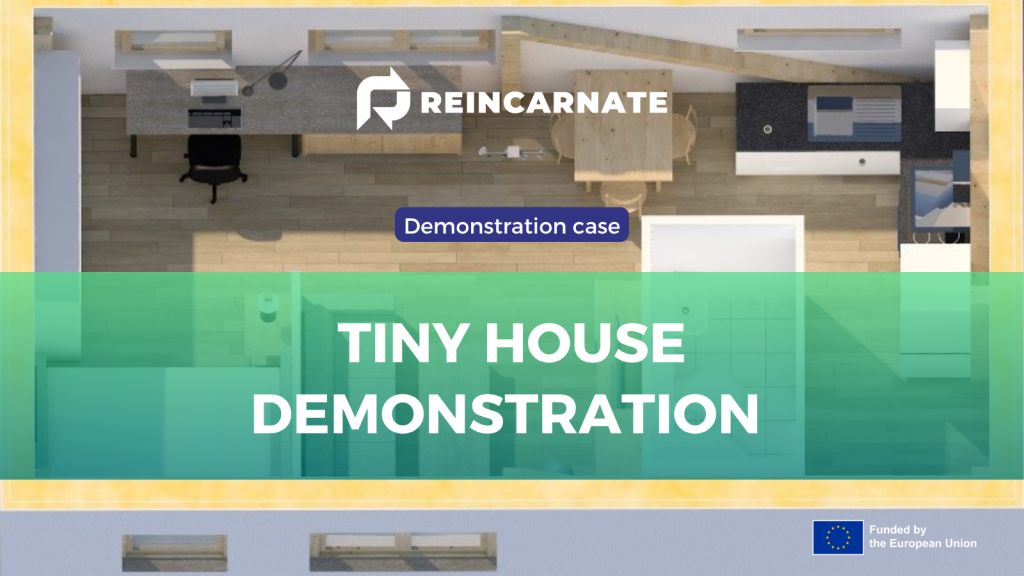
The demonstration method is a parametric BIM-based workflow that reverses the conventional design process. Instead of sourcing materials after defining the building, the system generates housing configurations based on the availability of reclaimed components. Recycled timber, steel, and panel elements are digitized and matched to structural and non-structural functions through optimisation algorithms, before being integrated into prefabricated modules designed for robotic assembly and future disassembly.
Check the One Pager
The results show strong environmental and economic potential. The system utilised a recycled material ratio of 75%, significantly exceeding the initial target of 40%, while also reaching the expected flexibility target of 70% for adaptable design configurations. With this assessment, industrialised production and reduced need for labour could enable a cost reduction of 20–40% at scale, alongside shorter construction times and lower material waste.
Check the Three Pager
Although the final demonstrator remained virtual due to budget constraints, the project provides proof of concept for circular, digitally enabled housing systems. This approach also identifies promising replication pathways in areas such as affordable housing and student accommodation, while demonstrating the importance of regulatory adaptation and standardised circular workflows.