
The Technische Universität Berlin, Reincarnate coordinator, hosted the last General Assembly in Berlin on May 27 and 28. The team gathered in Berlin for two days of exchanges dedicated to the project’s final closing, centered on defining the exploitation pathways and the long-term impact of the project’s results.
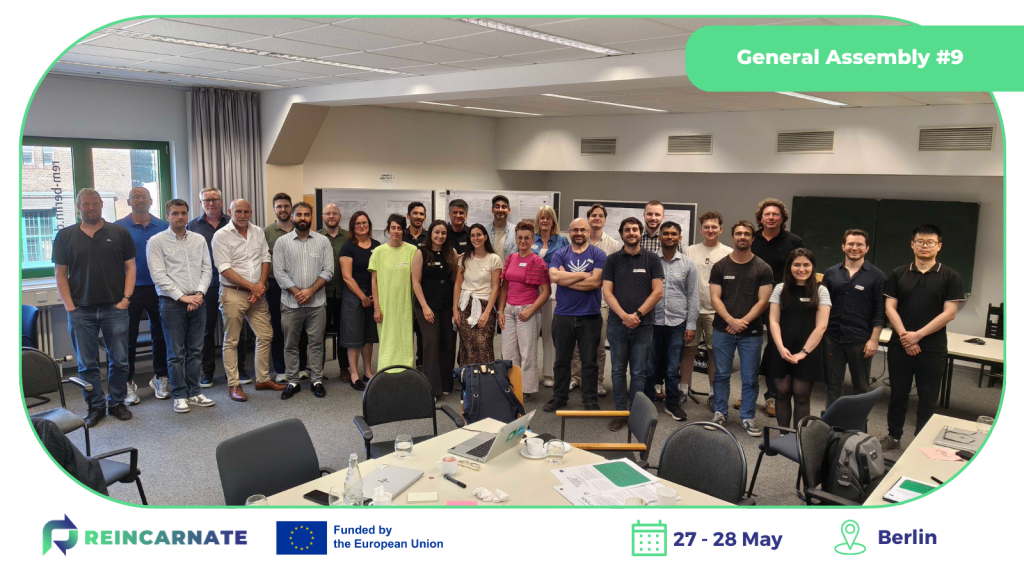
The first day focused on the Reincarnate Final Event Workshop, “Barriers and opportunities towards implementation and long-term impact”. The session brought together consortium partners, industry stakeholders, and external experts to validate realistic post-project pathways for selected Key Exploitable Assets (KEAs) and discuss the conditions needed for wider adoption in the construction sector.
Throughout the workshop, discussions explored four selected KEAs:
- Circular Potential Information Management (CP-IM), led by DEMO Consultants and Mainflux;
- Tiny House Production, led by 3L Architekten;
- BIM for Circular Value Flow Planning (BIM CVFP), led by Ragn Sells;
- Robot as a Service Window Upgrade, led by Technische Universität Berlin and 3L.
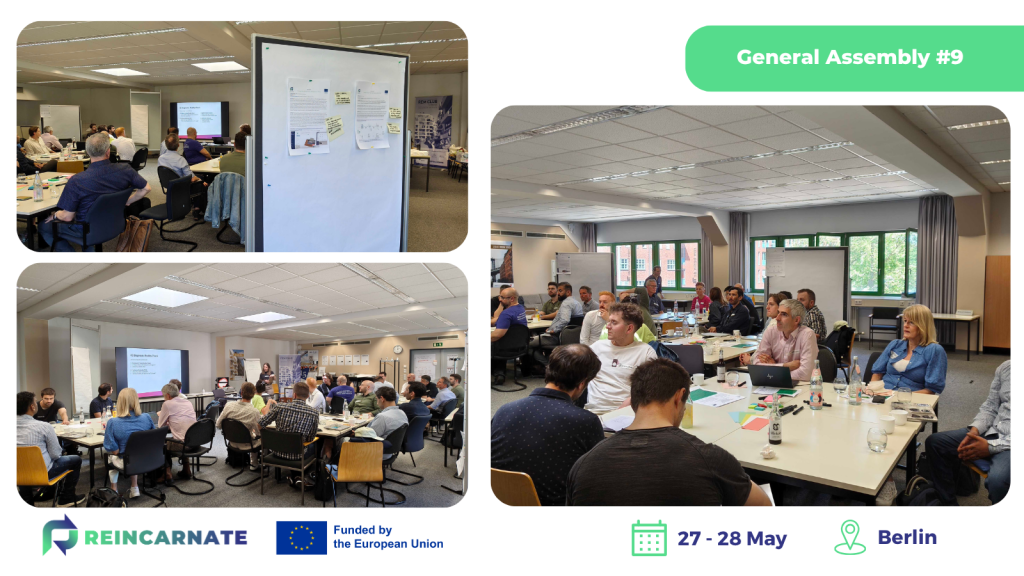
Participants examined implementation barriers, market opportunities, collaboration models, and future business potential connected to these circular construction solutions. The agenda also included portfolio walkthroughs, diagnosis and maturity checks, reflection sessions and discussions on potential partnerships.
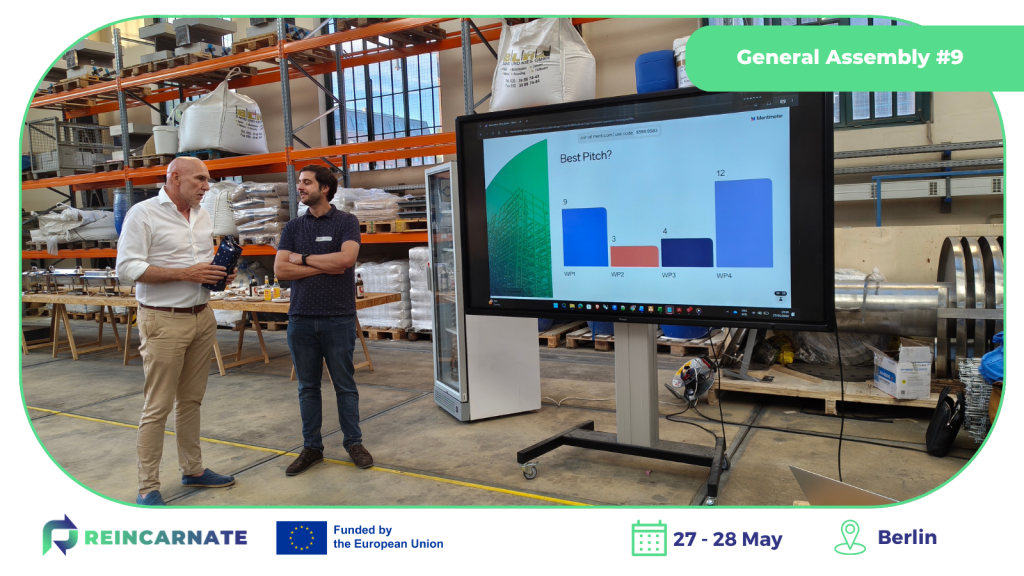
The first day concluded with a final session of our beloved and animated innovation pitches, with Joao Goncalves from Erasmus University Rotterdam taking the win thanks to great delivery and a strong pitch.
On the second day, consortium partners continued with the final General Assembly, formal closing, and review preparations. The meeting focused on final work package presentations, coordination activities, and preparation for the project’s concluding review phase.
With the project officially concluded, the final meeting in Berlin provided an opportunity to reflect on Reincarnate’s achievements and the knowledge generated throughout its lifetime. The consortium successfully demonstrated innovative approaches to circular construction, combining digital solutions, circular design principles, industrialised production methods, and new value chain collaborations to support more resource-efficient building practices.
Along the way, partners gained valuable insights into the challenges of scaling circular solutions, the importance of data-driven decision-making, and the need for close cooperation between industry, research, and public stakeholders. While the project has now come to an end, the tools, methodologies, and partnerships developed through Reincarnate will continue to support the transition towards a more circular and sustainable construction sector across Europe.